Sunday, March 31, 2024

Adaptive cruise control Wikipedia

what is active cruise control

If traffic slows to a stop, most ACC systems will bring the car to a complete stop, then bring it back up to speed when traffic gets going again. Others work only within certain speeds and/or might not start to accelerate automatically. Early systems didn’t allow for presetting the maintained following distance. Consequently, a vehicle six or seven car lengths ahead of you moving into your lane became almost an airbag-deploying event. However, as ACC systems evolved and improved, we became more accustomed to them. It can use radar, laser, binocular computer vision systems, a forward-aimed camera, or some combination of these technologies to track the traffic ahead of your vehicle.

Ducati Motorcycles with Adaptive Cruise Control — Multistrada V4 (Various trim levels)

” mapfreinsurance.com/blog/how-does-cruise-control-in-cars-work (accessed July 11, 2023). [5] “6 Cruise Control Safety Tips You Should Never Ignore,” Marisol Pereira and Carrie Adkins, getjerry.com/advice/6-cruise-control-safety-tips-you-should-never-ignore-by-marisol-pereira (accessed April 27, 2022). Around the world today, over one million SAE Level 1 and Level 2 automated vehicles use the TomTom ADAS Map – both private and commercial. Having doubled in less than one year, this number is bound to rise in the future. With so many automakers offering ACC, it‘s now an expected convenience feature for car buyers.

How do you turn off adaptive cruise control?

Somehow driving them always makes him feel excited and relaxed at the same time. After a brief stints with Road Magazine in the UK, and Jalopnik in the US, he has found his way back home to do what he loves, where he loves to be. On the flip side you can still spend $95,000-plus on an HSV GTS and not be able to access this type of technology. If you turn on Adaptive Cruise Control and do not see the trailering icon in the DIC when you try to change your gap settings, your vehicle is not properly equipped to use Adaptive Cruise Control while trailering. You should not use Adaptive Cruise Control while trailering if this is the case. Close this window to stay here or choose another country to see vehicles and services specific to your location.

BMW Telelever, Duolever Work, and EVO Telelever — Explained

But the nuance with adaptive cruise control is that it doesn’t just set your speed and forget it; it also regulates your speed if a vehicle in front of you is going slower than you’d like. Motorcycle manufacturers are very quick to remind riders that you can’t rely on adaptive cruise control as a life-saving device. You’re the one who twists the throttle, applies the brakes, and steers the bike. As drivers are getting more and more comfortable with using ACC while driving, the expectation for an even longer duration of continuous operation time for the system is rising.
what is active cruise control

PFF stands for Piaggio Fast Forward, a Boston-based research company under the Piaggio group (which owns Moto Guzzi). Like any rider safety system, adaptive/active cruise control isn’t something you should rely on to save your life. Kawasaki, BMW, and Ducati all use a Bosch system that Bosch generally classes as radar-based assistance systems (“ARAS”).

what is active cruise control

What Is the Difference Between Adaptive Cruise Control and Self-Driving?

I’ll attempt to address all this below, and update it as more and more bikes come out with ACC units. While wheel alignment and balance both contribute to a smoother ride, the services are quite different. A wheel alignment makes sure your tires contact the road in the correct way... Have you ever been confused as to the sounds coming from your vehicle when you brake? From grinding and rattling to thumping and squealing, you can learn how to decode...

Guide to Adaptive Cruise Control

Depending on the features, they range in cost from $250 to nearly $4,000. For most involved electric-system installations, it’s best to get them done by a dealership or certified mechanic. Installation cost depends on the sophistication of the system and the vehicle model. In essence, not only did the 1999 S-Class introduce the driver-aid technology adaptive cruise control (ACC), but it also set the cornerstone of the foundation for self-driving vehicles. Simple to use, all you need to do is turn on the system in your vehicle, reach your desired cruising speed, and set it. The system then assumes control of the accelerator, maintaining the set speed until the driver engages the brake.

Returning a Lease Car: What To Expect

That can be dangerous when you’re traveling behind another slowing vehicle.” She recommends reading the automaker’s website closely and learning about the speed ranges before using ACC while on your test drive. Level 2 – To qualify as Level 2, a vehicle must have at least two driver-assistance technologies. This typically includes ACC and another technology like lane-centering assist or lane-keeping assist. With these technologies, the vehicle can steer, accelerate, and brake on its own in certain conditions. Level 2 still requires the driver’s hands on the wheel and eyes on the road.

Do Car Safety Features Reduce Car Accidents? – Forbes Advisor - Forbes

Do Car Safety Features Reduce Car Accidents? – Forbes Advisor.

Posted: Tue, 02 Apr 2024 07:00:00 GMT [source]

Riders don’t notice the huge power on tap unless you dare to pin the throttle and hold it there for a long time. Otherwise, like many Japanese high-powered sport tourers, it’s very easy to ride. On top of that, as your lean angle increases, the bike limits the amount by which it accelerates or decelerates. This is so that you won’t be surprised by sudden braking or acceleration. To get an accurate reading, the sensor has to be able to pick up the returned signal cleanly. Because the returned signal is just the bit of radiation that bounced off another vehicle that might be quite far away — maybe 200 feet or 60 metres, at freeway/interstate speeds, the signal received is quite weak.

5 Acura Safety Features That Could Save Your Life - SlashGear

5 Acura Safety Features That Could Save Your Life.

Posted: Mon, 12 Feb 2024 08:00:00 GMT [source]

As new enhancements are made, the market is shifting to a new standard in ACC, called intelligent cruise control. Adaptive Cruise Control is generally designed to recognize and respond to most passenger vehicles and trucks. However, it may not detect objects small vehicles like motorcycles and bikes, or pedestrians. Adaptive cruise control has been in development since the 1990s.

The benefits of using the cruise control feature are better fuel efficiency and reduced foot fatigue during long drives. On most vehicles, Adaptive Cruise Control can follow a vehicle ahead to a stop. When the vehicle ahead starts moving again, you should check that it’s safe to proceed and then either press the accelerator pedal or RESUME button to continue driving. For very brief stops, Adaptive Cruise Control will automatically resume and follow the vehicle ahead. Speed limiters can be installed in vehicles as a safety feature, particularly in commercial vehicles like trucks and buses. These vehicles are often required by law to have speed limiters installed, as they can help prevent accidents caused by excessive speed.

Although the state of autonomous driving today is Level 2, a few carmakers are on the precipice of Level 3. For example, Tesla’s Enhanced Autopilot, Ford’s BlueCruise, the Mercedes Drive Pilot, and General Motors’ Super Cruise bring the potential for Level 3. A few over-the-air software tweaks will turn the potential into reality. However, like a stood-up date who is all dressed up with nowhere to go, you will not find Level 3-designated highways as of yet. No, it’s genuinely useful, which is not something we can say all of the latest driver aids. With every new model release, more and more of this technology is being introduced.

Adaptive Cruise Control: What is ACC in ADAS?

what is active cruise control

It also detects when a vehicle in front of you is going more slowly than you, and uses that as an input (whether to slow down, or to set off an alert). Moreover, the more sophisticated systems with full stop and start or a low-speed traffic-jam feature work great for city driving. Typically, ACC gets included in a trim level or some sort of optional driver-assistance package on new cars.

Adaptive Cruise Control Calibration

what is active cruise control

They can also make the systems overly sensitive, or not sensitive enough. Because it’s not an autonomous car, those with stop and go capabilities will only “go” again within three seconds if traffic flow allows. If it’s longer than three seconds, driver action is needed to re-engage the system. For example, the Hyundai Elantra SEL ($22,795 with destination fee) offers its Smart Cruise Control with Stop and Go in its optional Convenience Package ($1,900). It also includes forward collision warning with automatic emergency braking, Junction-Turning Detection, navigation, wireless phone charging, heated front seats, and more. On the other hand, the same ACC system is standard for the $27,395 Elantra Limited.

ACC with Stop & Go, Traffic Jam

[8] “Everything You Need to Know about Cruise Control,” Dave Johnston, mycarmakesnoise.com/electronics/cruise-control-guide (accessed July 11, 2023). So when ACC acts up, check for sensor obstructions, misalignment, and also ask your dealer to verify the latest software is installed. But it‘s impossible to evaluate every edge case scenario an ACC system may encounter once on the road. Names, tech, and bundled features make the automotive landscape — dotted with endless features, diverse names, and function variations — a bit tricky to navigate. To help you recognize ACC features, here are four automaker examples. To provide you with real-world car reviews, car news, and car buying advice to help make buying a car easier.

In the Works — Brands that haven’t yet released adaptive cruise control systems on motorcycles

Adaptive Cruise Control: How Does It Work? - Kelley Blue Book

Adaptive Cruise Control: How Does It Work?.

Posted: Thu, 21 Jul 2022 07:00:00 GMT [source]

All the while, data from sensors is used to keep a set, safe distance from cars ahead when you encounter heavy traffic. The normal cruise control we’re all used to allows a driver to set a speed and then the car will maintain that speed without the driver needing to touch the accelerator pedal. Then when the driver needs to adjust the speed, they can either do so via the cruise control stalk and/or buttons on the steering wheel, depending on the make and model of vehicle. The driver can also deactivate cruise control via the brake pedal, or momentarily increase the speed, say, when overtaking, by pressing the accelerator pedal. Cruise Control may return to the preset speed if you have deactivated it by pressing the accelerator, but will always disengage entirely if you have used the brakes or changed gear in a manual.

While it can help reduce driver fatigue and improve fuel economy on long drives, it requires the driver to remain attentive and adjust the speed manually if necessary. Therefore, it is important for drivers to use it responsibly and not rely solely on the system to maintain a safe driving experience. TomTom creates technologies for a moving world that supports all levels of autonomous driving. To learn more about how the ADAS Map is already powering automated vehicles on the road today, download the product sheet.

All these are critical components for car manufacturers developing the latest standard in automated driving systems. They begin with no automation and wrap up with full automation, including vehicles without pedals or steering wheels. By the early 1990s, Japanese carmakers were adding a form of forward collision warning to their cruise control, but it was still up to the driver to react and apply the brakes. Not until Mercedes-Benz developed its Distronic cruise control did cruise control with self-braking make its first public appearance. When this sort of radar technology first appeared it was as a $1500 cost option on the $220,000+ 1999-model Mercedes-Benz S-Class.

Can my vehicle switch between Adaptive Cruise Control and cruise control?

Stop-and-Go speed control systems can help reduce the stress and fatigue of driving in heavy traffic, as the system takes care of maintaining a safe distance and speed. Some systems also have the ability to recognize and respond to pedestrians and other obstacles, providing an added layer of safety. ACC is a major component and precursor of fully autonomous vehicles. On its own, ACC is a Level 1, but when combined with another driver assist feature that steers, your vehicle reaches Level 2 on the Driving Automation scale – a step closer to fully autonomous driving.

Newer systems use the brakes and even gears to properly maintain the target speed up or down hill. You can also use your active cruise control as standard (non-adaptive) cruise control, anyway. This is more something to think about when you own a motorcycle long-term. Sometimes you may ride through countries where your radar isn’t licensed to operate. In those cases, you dive through the menus, turn active cruise control off, and use cruise control as normal.

ACC will usually be part of a suite of safety features that some manufacturers refer to as ‘Forward Collision Warning’. These systems are always active and commonly include, lane departure warnings, lane departure assist, brake assist, pedestrian detection and so on. Subaru offer it as standard equipment on the top-spec Forrester and Outback models, and all of the Liberty range. The latter are the only vehicles in Australia that offer the feature in a sub-$30K car ($29,990+ORC).

Interestingly Subaru are one of the few manufacturers that don’t use radar technology for this feature. Instead they use an optical system called Eyesight based on stereoscopic cameras placed on either side of the rear view mirror. It’s important to remember that cruise control is not a substitute for attentive driving.

With or without ACC, it’s important to always leave more space during poor driving conditions, including inclement weather. Automotive engineers tweaked around the edges of cruise control for the next 35 years. However, cruise control didn’t evolve much beyond the first system that found its way into the 1958 Chrysler Imperial.

Fully automated vehicles are already being tested in different parts of the world and what we are seeing in the market place today, are the trickle down effects from that innovation. When towing a trailer, Adaptive Cruise Control driving characteristics, such as following gap, acceleration rates and braking rates, may be modified to provide a better towing experience. Adaptive Cruise Control has limited braking capability, so if the vehicle you’re following stops too suddenly, you’ll get an alert to take action by quickly applying the brakes yourself. Honda just released their NT1100 sport tourer, which has cruise control, but it’s not active.

The ACC may not detect long overhanging loads on trucks, or narrow vehicles like motorcycles. It is critical to understand the limitations of the system and be sure that you are only using these systems as a back up to your own driving. Don’t think it’s a set and forget kind of thing; you must still be paying attention to what’s happening around you. Cruise control has come a long way from its early days in its quest to assist drivers on the road. When first introduced, it was only found in luxury car models due to its high production cost. As less expensive sensors reached the market, adaptive cruise control is steadily becoming a standard feature in new vehicles today.

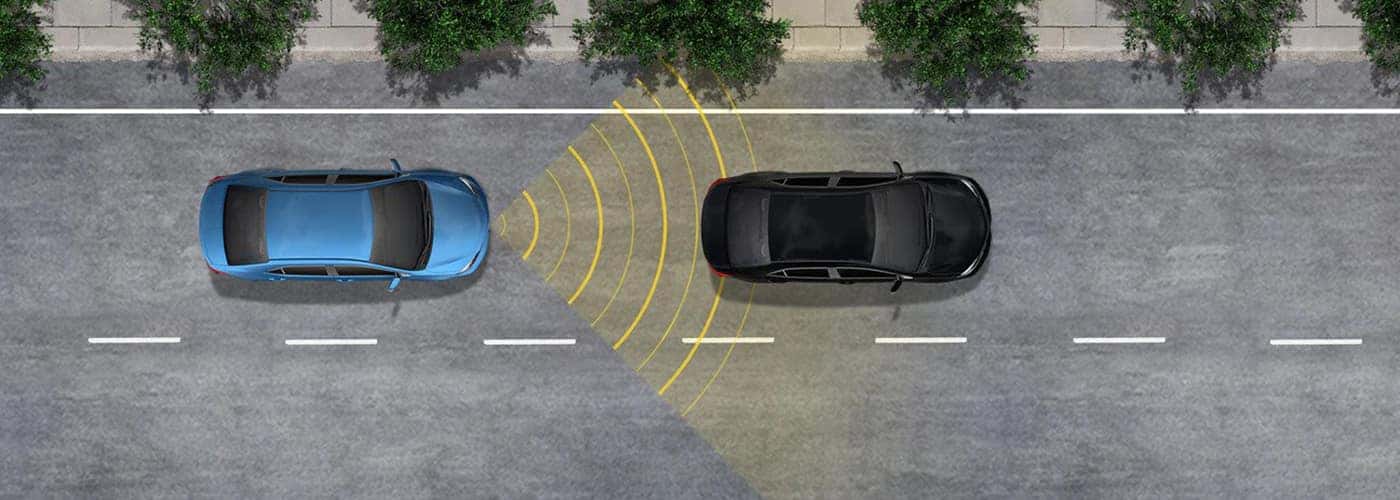
Cruise control is still the more prolific of speed controls offered on today’s new cars, but adaptive cruise control has started gaining ground. More car models provide it as standard or as an available option. But, what exactly is adaptive cruise control, and how does it work? If the system doesn’t detect a vehicle ahead, Adaptive Cruise Control works just like cruise control and maintains your selected cruise speed. When the system detects a vehicle ahead of you in your lane, it will automatically slow down or speed up your vehicle to maintain your selected following gap. Bosch has developed several ADAS functions relying on TomTom ADAS Map data services for intelligent cruise control, upcoming curve alerts and jam tail warnings.

My first pick would be the liquid-cooled Indian Challenger model range. Big air-cooled engine, yes, but also you’re piloting a starship. We’ll look more at how to use these functions on different motorcycles below.

Salon Equipment and Beauty Supply in Los Angeles CosmoProf

Table Of Content years in business Places Near Los Angeles, CA with Beauty Salons Call to book Oasis Beauty Salon Search Star Beauty Salon ...